
You've Been Overpaying for a Worse Shave Your Whole Life
Here's a number that should bother you: the average cartridge shaver spends over $120 per year on refill heads alone. Multiply that over a decade and you've burned through serious cash on a shave that's probably irritating your skin in the process.
You're not alone in the habit. Back in 2020, over 158 million Americans were using disposable razors — a massive chunk of the population locked into a system designed to keep selling overpriced refills.
This article breaks down the real comparison: wet shaving (a method), cartridge razors (a tool), and safety razors (another tool). We're covering cost, skin health, sustainability, and which setup actually fits your life. No hype, just the math and the facts.
What Is Wet Shaving? (And Why It's Not Just a Razor Type)
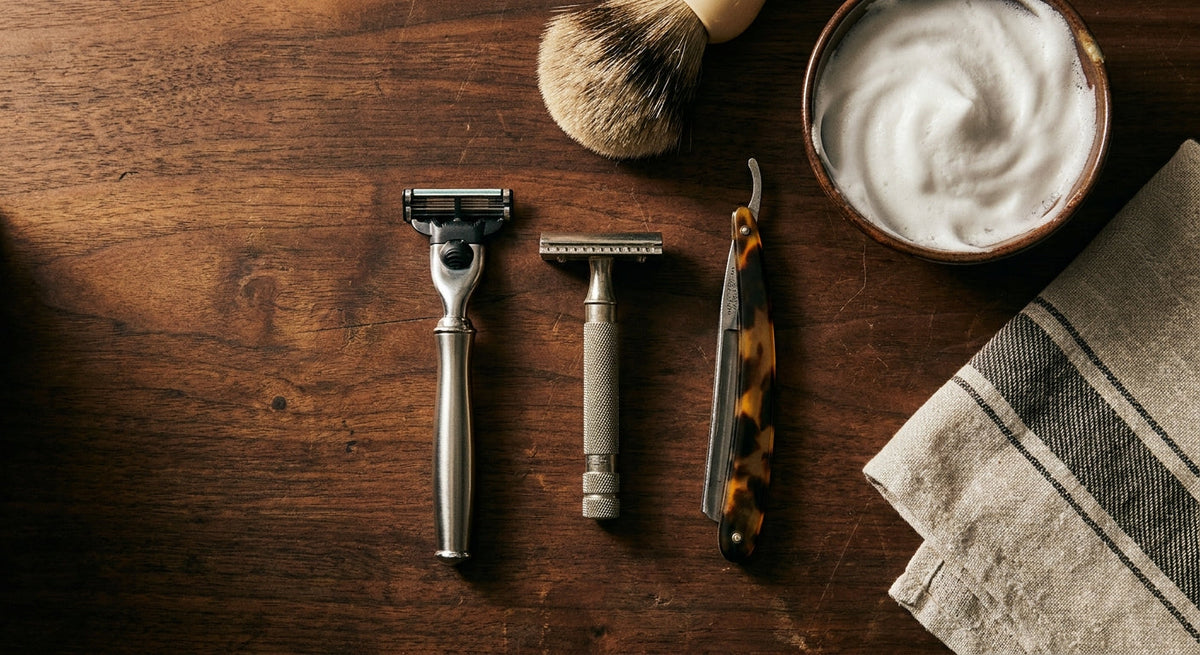
A lot of guys hear "wet shaving" and picture a specific razor. That's not quite right. Wet shaving is a method, not a piece of hardware. It means prepping your face with warm water, lathering up with a quality shaving soap or cream using a brush, and then shaving with a proper razor. You can wet shave with a cartridge, a safety razor, or a straight razor.
The method works because it softens your facial hair and creates a slick, lubricated surface between the blade and your skin. That means less friction, less irritation, and a closer cut. Compare that to the way most men actually shave: dry face, canned foam, cartridge razor, done in 90 seconds while half-awake.
There's also a mental health angle gaining traction. Wet shaving is increasingly recognized as a daily mindfulness practice. The predictable, hands-on routine forces you to slow down, focus, and start your morning with intention. It's not meditation, but it's not far off.
The numbers back up the momentum. North America's wet shave market is projected to grow at a 9.8% CAGR, driven by men who want more from their morning routine than a rushed scrape across the jaw.
Cartridge Razors: Convenient, Costly, and Hard on Your Skin
Cartridge razors hit the market in 1971. That makes them a relatively recent invention, yet they've been marketed so aggressively that most men assume they're the only real option. They're not.
The fundamental problem with cartridge razors is the multi-blade design. Stacking 3 to 5 blades into a single cartridge head means every stroke drags multiple edges across your skin. That's not efficiency; it's repeated trauma. Studies show that multi-blade cartridges cause 27% more skin irritation than double-edge safety razors. If you deal with razor bumps, redness, or ingrown hairs (the medical term is pseudofolliculitis barbae), the cartridge is likely making it worse.
Then there's the environmental angle most people overlook. Those lubrication strips on cartridge heads release microplastics into your wastewater every time you rinse. It's an underreported issue happening in millions of bathrooms every morning.
The waste numbers are staggering. According to EPA estimates, roughly 2 billion disposable and cartridge razors are thrown away in the United States every year. Cartridge heads are made from a mix of plastic, rubber, and metal, which makes them effectively non-recyclable.
To be fair, cartridge razors have a legitimate upside. They're fast, forgiving, require almost no technique, and they're available at every drugstore. If you're traveling light or genuinely pressed for time, a cartridge gets the job done. But convenience comes at a cost, and that cost adds up fast.
Safety Razors: The Old-School Tool That Beats Modern Tech
The safety razor has been around since the late 1800s. That's over a century of proven performance, long before anyone thought to stack five blades into a plastic cartridge and call it progress.
The design is simple: one double-edged blade, exposed at the correct angle, doing the cutting. No tug-and-pull. No multiple passes per stroke. Just a single, clean edge gliding across your skin. For men with sensitive skin or those who suffer from ingrown hairs, this single-blade approach is a game-changer. That 27% reduction in irritation compared to cartridges isn't a marketing claim; it's the mechanical reality of fewer blades touching your face.
Sustainability is where safety razors really pull ahead. The blades are 100% recyclable stainless steel. No plastic. No rubber. No mixed-material waste headed for a landfill. Demand for reusable metal safety razors has grown by nearly 38% in recent years as environmental awareness pushes men toward better options.
This isn't just an older generation holding onto tradition. Social media and grooming content creators have driven roughly 32% of young adults toward traditional shaving tools. Millennials and Gen Z are picking up safety razors because they're practical, sustainable, and connected to a culture that values craftsmanship over disposability.
That culture runs through The Grease Shop's community: classic barbershop heritage, attention to detail, and respect for tools built to last. The global safety razor market reflects this momentum, valued at $5.89 billion in 2025 and projected to reach $8.31 billion by 2035.
The Real Cost of Shaving: A 5-Year Breakdown
Most men have never actually done the math on what their shaving habit costs. Here's the breakdown.
Cartridge razor system:
- Replacement cartridge heads: $2 to $5 each
- Daily shavers go through 40 to 50 heads per year
- Annual refill cost: $120+
- Cost per shave: approximately $0.67
- 5-year total (refills only): $600+
Safety razor system:
- 100 double-edge blades: approximately $10
- Cost per shave: $0.10 to $0.15
- Quality safety razor handle: $25 to $50 (one-time purchase)
- 5-year total: roughly $90 to $120
That's approximately $507 in savings over five years by switching to a safety razor. The setup pays for itself in about 26 weeks.
The waste difference is just as dramatic. An average cartridge shaver discards 50 to 100 cartridge heads per year. Over a lifetime of shaving, that's 1,000+ units of non-recyclable mixed-material waste per person. Safety razor blades? Toss them in a blade bank and recycle the steel.
Over 61% of razor users now say they prefer durable, long-lasting razors over disposable alternatives. Once you see the numbers, it's easy to understand why.
Switching to a Safety Razor: What to Expect in the First Month
There's a learning curve. A safety razor handles differently than a cartridge, and your first few shaves won't be perfect. That's normal, and it's part of the process.
Week 1: Focus on three things. Hold the razor at a 30 to 45 degree angle. Apply zero pressure (let the weight of the razor do the work). Shave with the grain only, in single passes. You'll probably miss some spots. That's fine.
Weeks 2 and 3: As your hand learns the angles, start introducing cross-grain passes for a closer shave. Minor nicks will decrease significantly as your technique improves. You'll start to notice less irritation than you were getting with your old cartridge.
Week 4: This is where it clicks. Most men report noticeably smoother skin, fewer ingrown hairs, and a real sense of mastery. The shave becomes something you look forward to rather than rush through.
Think of it as building a skill, not performing a chore. It's the same craftsmanship mindset that drives everything at The Grease Shop. If you're not sure where to start, our curated selection of safety razors and wet shaving supplies from over 30 trusted grooming brands takes the guesswork out of finding the right starter setup. No algorithm. No faceless marketplace. Just honest recommendations from people who actually use this stuff.
Which Razor Is Right for You? A Lifestyle-Based Guide
The best razor depends on how you live.
- Frequent traveler or time-pressed professional: A cartridge razor still has its place for quick shaves on the road. Consider a travel-friendly safety razor as you build confidence.
- Sensitive skin or razor bump sufferer: A single-blade safety razor with proper wet shave prep is the clear winner. Fewer blades means less irritation, period.
- Eco-conscious shaver: With 2 billion disposable razors hitting U.S. landfills every year, the safety razor is the only logical choice.
- Classic grooming enthusiast: If you're part of the greaser, biker, or barbershop culture, wet shaving with a safety razor is the authentic experience. It's the tradition you're already connected to.
- Budget-focused shaver: Safety razor wins on every multi-year cost comparison. The math doesn't lie.
One more thing: even if you stick with a cartridge, adding a proper wet shave routine (warm prep, quality lather, a good brush) will improve your results. The method matters as much as the tool.
Stay Sharp: The Bottom Line on Razors in 2026
Here's the verdict. Wet shaving is the method. The safety razor is the tool. Together, they win on cost, skin health, sustainability, and culture.
Cartridge razors aren't going anywhere, and they serve a purpose when convenience is the priority. But the trade-offs in long-term cost, skin irritation, and environmental impact are hard to justify once you know the numbers.
Choosing a safety razor isn't just a grooming decision. It's a statement about how you take care of yourself: with intention, with quality tools, and with respect for the craft.
Stay Sharp. Look Sharp. Enjoy the life you work hard for.
Ready to make the switch? Check out The Grease Shop's tutorials, grooming guides, and curated selection of safety razors and wet shaving gear. We're here to help you find what works.