
You're Probably Using the Wrong Shampoo — And the Wrong Way — Maybe not
Most men treat shampoo like an afterthought. Grab whatever's on the shelf, scrub it around, rinse, done. But shampoo is the foundation of every grooming routine you'll ever build, and the global market (worth over $37 billion in 2025) exists because this stuff actually matters.
Two problems trip most guys up: they're using the wrong type of shampoo for their hair and scalp, and they're applying it incorrectly. This guide covers both. We'll break down the seven shampoo types worth knowing and walk through the technique that makes each one work harder for you.
Grooming is self-respect. Getting the basics right is where it starts.
See our full collection of Shampoos as well as conditioners HERE
The 7 Shampoo Types Men Should Know
Think of this as a mechanic's guide, not a product roundup. Each shampoo type has a specific job. Knowing what each one does and when to reach for it puts you ahead of most guys who grab the first bottle they see.
The seven types: clarifying, moisturizing, volumizing, anti-dandruff, sulfate-free, 2-in-1, and dry shampoo. Specific-purpose shampoos now hold roughly 54% of the global market share, which tells you that men are already moving toward targeted solutions. Make sure you're picking the right one.
Clarifying Shampoo: The Deep Reset
Clarifying shampoos use powerful surfactants to strip product buildup, excess oil, and environmental grime from your scalp and hair shaft. If your hair feels heavy, greasy, or refuses to hold a style, this is the shampoo that fixes it.
For pomade and wax users, this is especially critical. Oil-based products don't wash out easily. That's where the double cleanse method comes in: your first wash breaks down the product, and your second wash actually cleans the hair and scalp. One pass often isn't enough.
Look for formulas with tea tree oil, salicylic acid, or charcoal. These ingredients are particularly effective for oily scalps.
Critical rule: use clarifying shampoo only once or twice a week. Daily use will strip your scalp of the natural oils it needs, leaving your hair dry and your scalp irritated. This is a reset tool, not a daily driver.
Moisturizing Shampoo: For Dry, Coarse, or Damaged Hair
Moisturizing shampoos replenish what harsh products, heat, and sun exposure take away. They're formulated with hydrating ingredients like argan oil, shea butter, glycerin, and coconut oil to restore softness and manageability.
These are your best bet if you have dry, coarse, chemically treated, or sun-damaged hair. The formulas are gentler than clarifying shampoos, so you can use them more frequently without worrying about over-stripping.
A practical note: if you use water-based pomades or lighter styling products, a moisturizing shampoo is likely all you need. Heavy oil-based product users should save this for their off days and keep a clarifying shampoo in rotation.
Volumizing Shampoo: For Fine or Thinning Hair
Volumizing shampoos use lightweight ingredients to lift hair at the root and add body. They deliberately skip heavy silicones and oils that flatten fine hair against the scalp.
If you're dealing with thinning hair specifically, look for ingredients like biotin, caffeine, niacin, and saw palmetto. These support scalp health and hair density at the follicle level.
The distinction worth understanding: volumizing shampoos address appearance and lift, while thinning-hair formulas target scalp health and follicle support. If you're losing density, you may benefit from using both.
Anti-Dandruff Shampoo: Treat the Scalp, Not Just the Flakes
Dandruff isn't a hygiene problem. It's caused by yeast overgrowth, excess oil production, or scalp inflammation. An estimated 50% of adults worldwide experience at least one scalp condition, so if you're dealing with flakes, you're far from alone.
Anti-dandruff shampoos target the root cause, not just the visible symptom. The key active ingredients each do something different:
- Zinc pyrithione fights fungal overgrowth
- Ketoconazole provides prescription-strength antifungal action
- Salicylic acid exfoliates dead skin cells from the scalp
- Tea tree oil soothes inflammation naturally
Newer anti-dandruff formulas are designed to preserve the scalp's natural bacterial ecosystem using probiotics and postbiotics, rather than wiping everything out. Think of it as treating your scalp the way good skincare treats your face.
Tip: rotate your anti-dandruff shampoo with a gentler formula on non-treatment days. Using medicated shampoo every single wash can dry out your scalp and create new problems.
Sulfate-Free Shampoo: Gentler Clean, Smarter Choice
Sulfates (SLS and SLES) are powerful detergents. They cut through oil and product effectively, but they can be harsh on sensitive scalps and strip hair of its natural moisture with daily use.
Sulfate-free shampoos use milder surfactants, and they've become the market standard rather than the exception. The sulfate-free haircare market is projected to reach $1.09 billion by 2033, and over 62% of Gen Z and millennials already prefer sulfate-free formulations.
The honest trade-off: sulfate-free is better for daily use, color-treated hair, and sensitive scalps. But it may not fully remove oil-based pomades or heavy waxes in a single wash. That's exactly where clarifying or sulfate-based shampoos earn their spot in your rotation.
Practical guidance: if you use water-based styling products, you can go sulfate-free full-time. If you're an oil-based pomade user, keep a clarifying or sulfate shampoo on hand for wash days when you need a deeper clean.
2-in-1 and Dry Shampoo: The Convenience Options
2-in-1 shampoo and conditioner is convenient for travel or stripped-down routines. But the conditioning agents can coat the scalp and reduce cleansing effectiveness over time. Use it occasionally, not as your everyday go-to.
Dry shampoo absorbs excess oil at the roots using aerosol or powder. It's ideal for refreshing your hair between washes, on gym days, or when you're short on time. Men account for 81.3% of dry shampoo end-use, yet it's rarely discussed in men's grooming content. It belongs in your kit.
Two rules to remember: dry shampoo does not replace a real wash, and overuse will clog follicles and create buildup. For best results, apply it the night before so it has time to absorb oil properly, not right before you walk out the door.
How to Actually Use Shampoo Correctly
Choosing the right shampoo is only half the equation. The other half is technique, and most men have never been taught the basics. Here's the proper method, broken into four steps: amount, placement, motion, and rinse temperature.
Amount, Placement, and Massage
Start with a coin- to quarter-sized amount. Most men use way too much, which leads to residue, buildup, and wasted product.
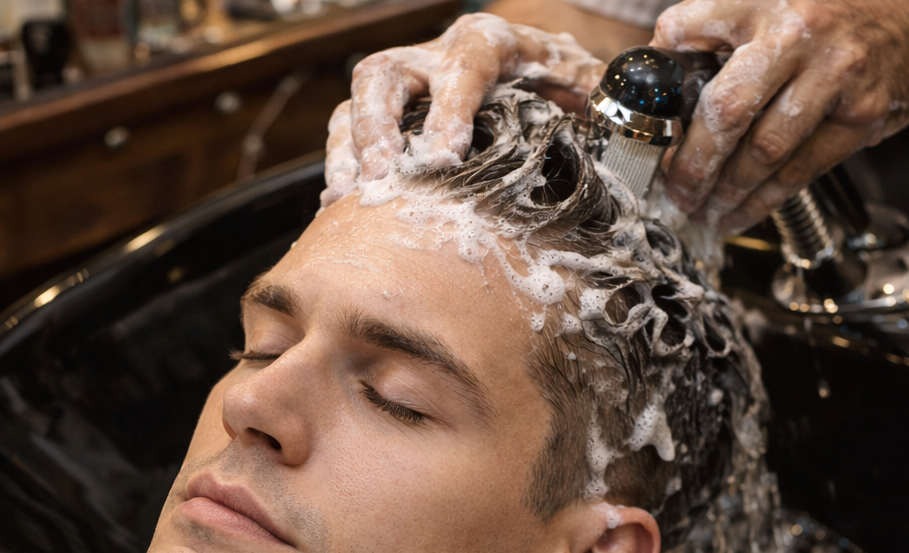
Apply shampoo directly to your scalp, not the lengths of your hair. The scalp is where oil, sweat, and product accumulate. That's where the cleaning needs to happen.
Massage with your fingertips (never your nails) in circular motions for one to two minutes. This stimulates blood flow to the scalp and ensures thorough cleansing. As you rinse, the shampoo naturally travels down the hair shaft and cleans the lengths on its own. You don't need to lather up the ends separately.
Finding the right formula for your hair type and styling routine makes all of this more effective. The Grease Shop carries shampoos from over 30 trusted grooming brands, so you can match your shampoo to exactly what your hair needs.
Rinse Temperature and Frequency
Hot water strips natural oils from your scalp and hair shaft. It feels good, but it leaves your hair dry and prone to frizz. Rinse with lukewarm or cool water for healthier hair and better moisture retention.
On washing frequency: there's a persistent myth that washing your hair daily is harmful. A peer-reviewed study published in Skin Appendage Disorders (Karger) found that overall satisfaction with hair and scalp condition was highest when washing five to six times per week. Daily washing outperformed once-per-week washing on every measured endpoint.
The real answer is that frequency should match your hair type, scalp oiliness, and lifestyle. Active men, tradesmen, and heavy product users may genuinely need to wash daily. Guys with dry or coarse hair might do better with three to four washes per week. There's no universal rule.
One technique worth adopting: shampoo cocktailing. Rotate between two shampoo types based on what your hair needs that day. For example, use a moisturizing shampoo 80% of the time and a clarifying shampoo 20% of the time. You get consistent hydration without letting buildup accumulate.
Stay Sharp: Build a Shampoo Routine That Works for You
There's no single right shampoo. The right choice depends on your hair type, your scalp condition, and the styling products you use. Now you know the seven types and when each one earns its place in your rotation.
If you take one thing from this guide, make it the double cleanse. For heavy product users, that single change will make the biggest difference in how your hair looks and feels.
Treat your scalp with the same intentionality you'd give your face. The "skinification" of scalp care isn't a passing trend; it's the logical next step in how men approach grooming. Your scalp is skin. Take care of it.
Grooming is self-respect. Knowing your tools is how you stay sharp.
Look Sharp. Play Hard. Start with the right shampoo.
See our full collection of Shampoos as well as conditioners HERE