
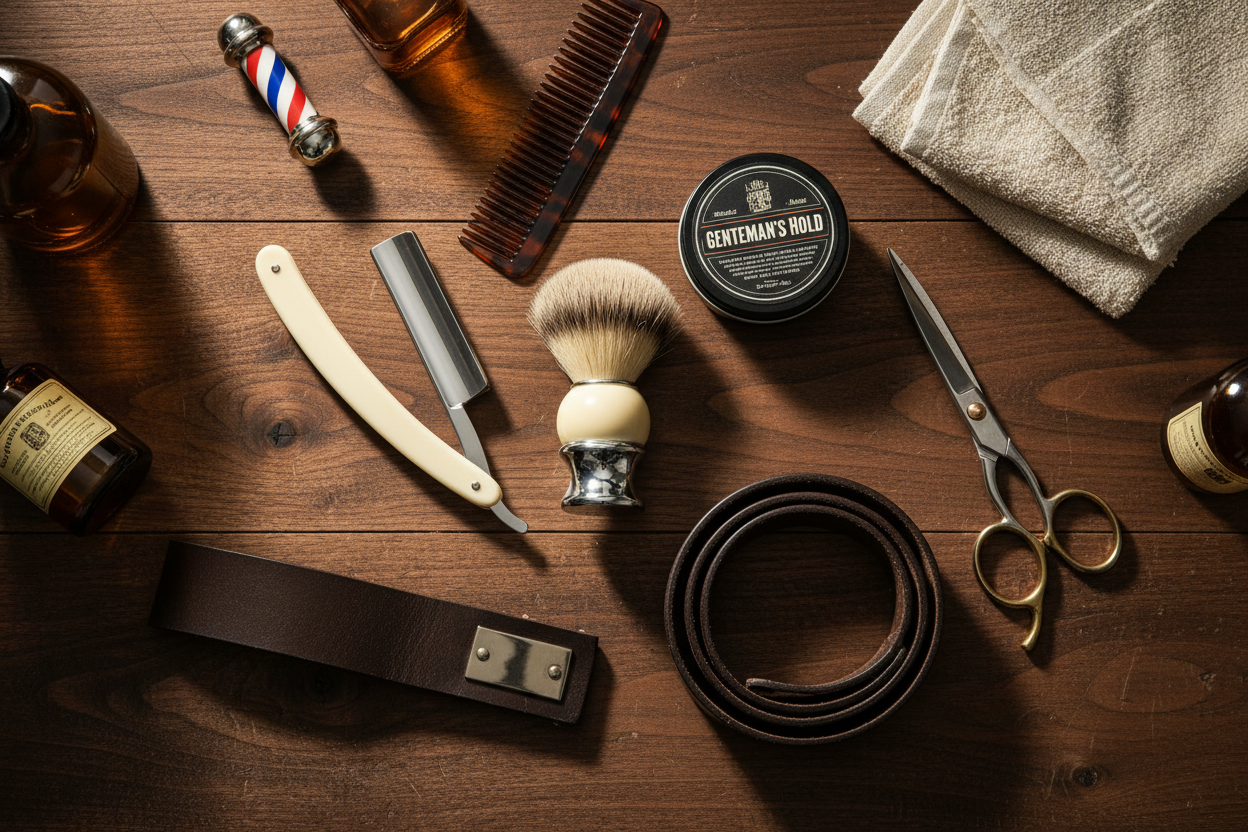
From pomades and straight razors to pompadours and ducktails, the world of classic men's grooming has its own language. This glossary breaks down the key terms you'll run into when shopping for styling products, shaving gear, beard care, and more. It's built for guys who want to know exactly what they're buying and how to use it.
Aftershave Balm
A moisturizing post-shave product that soothes and hydrates skin after razor contact. Unlike alcohol-based aftershave splashes, balms skip the sting and focus on calming irritation and locking in moisture. They're a solid pick for guys with sensitive or dry skin.
Alum Block
A natural mineral block (potassium alum) rubbed over wet skin after shaving to tighten pores, soothe irritation, and seal small nicks. It's been a barbershop staple for generations. Rinse it off after about 30 seconds and follow up with your aftershave balm or moisturizer.
Beard Oil
A conditioning blend of carrier and essential oils applied to beard hair and the skin underneath. It softens coarse facial hair, reduces itch, and prevents the flaking that comes with dry skin beneath the beard. A few drops worked in daily keeps things looking and feeling healthy.
Beard Wash
A cleanser formulated specifically for facial hair, which is coarser and grows from more sensitive skin than the hair on your head. Regular shampoo can strip natural oils and dry out your beard. Beard wash cleans without over-drying, keeping both the hair and skin beneath in good shape.
Brilliantine
A lightweight, high-oil styling product that delivers intense shine and a wet, glossy look with minimal hold. It's essentially a thinner cousin of traditional oil-based pomade. Brilliantine was a go-to for slick, polished styles in the early-to-mid 20th century and remains a classic choice for guys chasing that old-school gleam.
Clarifying Shampoo
A deep-cleansing shampoo designed to strip heavy product buildup from your hair. If you use oil-based pomades regularly, petroleum residue can accumulate over time, and standard shampoo won't always cut through it. A clarifying shampoo used once a week or so resets your hair to a clean slate.
Ducktail (D.A.)
A classic 1950s greaser hairstyle where hair on both sides is slicked back to meet at a central ridge running down the back of the head. The name comes from its resemblance to the tail feathers of a duck. Achieving a clean ducktail typically requires a strong-hold oil-based pomade and a fine-tooth comb.
Fade
A barbershop cutting technique where hair gradually transitions from very short (or skin) at the sides and back to longer hair on top. Fades can be low, mid, or high depending on where the transition begins. It's one of the most requested cuts in any barbershop and pairs well with pompadours, slick backs, and other classic styles.
Hair Clay
A styling product built around kaolin or bentonite clay that provides a matte, textured finish with medium to strong hold. It adds volume and grip without any shine, making it a good option for guys who want a more natural, lived-in look. Clay works especially well on shorter to medium-length hair.
Hair Tonic
A liquid styling product with low hold and high shine, applied to damp or dry hair for a polished, classic look. Hair tonics have deep roots in barbershop culture, dating back to when every chair had a bottle on the counter. They're ideal for light, everyday styling and keeping hair looking healthy.
Hair Wax
A pliable styling product that offers medium hold with a low-to-natural sheen. Wax lets you shape and restyle your hair throughout the day without it locking stiff. It's a versatile option for textured, structured styles that still need to move.
Hold Strength
A rating that describes how firmly a styling product keeps your hair in place, typically ranging from light to firm (or heavy). Light hold suits relaxed, natural styles, while firm hold is what you need for a pompadour that won't budge. Most pomades, clays, and waxes list their hold strength on the label.
Jelly Roll
A greaser hairstyle featuring a large, dramatic curl or wave rolled at the front of the head. It was a signature look in 1950s rockabilly culture and requires a generous amount of pomade to shape and hold the curl in place. The jelly roll is a bold style that makes a statement.
Matte Finish
A product finish with little to no shine, giving hair a natural, dry-looking texture. Clays, pastes, and certain waxes typically deliver a matte finish. It's the opposite end of the spectrum from the high-gloss look you get with traditional oil-based pomades.
Mustache Wax
A firm-hold wax used to shape, style, and tame mustache hair. It's stiffer than beard balm, giving you the control needed to hold curled tips, handlebars, or a neat, groomed shape throughout the day. A small amount warmed between your fingers goes a long way.
Oil-Based Pomade
The original pomade formula, built on a petroleum or wax base that delivers strong hold and high shine. Oil-based pomade is the backbone of greaser styling; it keeps hair slick and in place all day and can be restyled with a comb without reapplying. The trade-off is that it takes more effort to wash out, often requiring a clarifying shampoo.
Pomade
A hair styling product used to shape, hold, and add shine to your hair. Pomade comes in oil-based, water-based, and hybrid formulas, each with different hold and washout characteristics. It's the cornerstone product of classic barbershop and greaser grooming.
Pompadour
The signature greaser hairstyle where hair is swept upward and back from the forehead to create height and volume on top. Made iconic by Elvis Presley and James Dean, the pompadour is the style most closely associated with pomade. A strong-hold pomade and a good comb are all you need to build one.
Quiff
A hairstyle featuring volume at the front of the head, swept upward and sometimes slightly to one side. It shares DNA with the pompadour but tends to be a bit more relaxed and versatile. Pomades and waxes both work well for building and holding a quiff.
Rockabilly
A music-rooted subculture that blends rock and roll with country, originating in the 1950s. Its aesthetic, including slicked-back hair, cuffed jeans, leather jackets, and vintage Americana, is the cultural foundation of greaser style. Rockabilly culture is a major influence on the products and attitude behind classic men's grooming.
Safety Razor
A razor with a protective guard between the blade and your skin, using a replaceable double-edge blade. Safety razors offer a close, clean shave with less irritation than multi-blade cartridge razors when used with proper technique. They're a staple of traditional wet shaving and a more economical choice over time.
Shine Level
A product descriptor that indicates how much light your hair reflects after styling, ranging from matte (no shine) to high shine (wet, glossy look). Shine level is one of the two main factors, alongside hold strength, for choosing the right styling product. Traditional oil-based pomades sit at the high-shine end, while clays and pastes fall on the matte side.
Slick Back
A foundational greaser hairstyle where all the hair is combed straight back from the forehead using pomade. It's clean, sharp, and timeless. A medium-to-strong hold pomade keeps everything locked in place, and a pocket comb lets you touch it up on the go.
Straight Razor
A traditional razor with a single, exposed blade that folds into its handle. Straight razors require regular stropping and occasional honing to maintain their edge, but they deliver the closest possible shave. They're a hallmark of classic barbershop culture and a tool that rewards patience and skill.
Taper
A haircut technique where hair gradually gets shorter as it approaches the neckline and around the ears, creating a clean, finished look. A taper is subtler than a fade and is a standard finishing detail in classic barbershop cuts. It keeps the edges of your haircut looking sharp as it grows out.
Water-Based Pomade
A modern pomade formula that uses water-soluble ingredients instead of petroleum. It washes out easily with just water, offers flexible hold, and can range from matte to high shine depending on the product. Water-based pomades are a practical choice for guys who want the styling control of pomade without the heavy buildup.
Wet Shaving
The traditional method of shaving that uses a safety razor or straight razor along with shaving cream or soap, a brush, and water. It's the opposite of dry electric shaving and tends to produce a closer, smoother result. Wet shaving is a ritual rooted in classic barbershop tradition, and the right tools make all the difference.